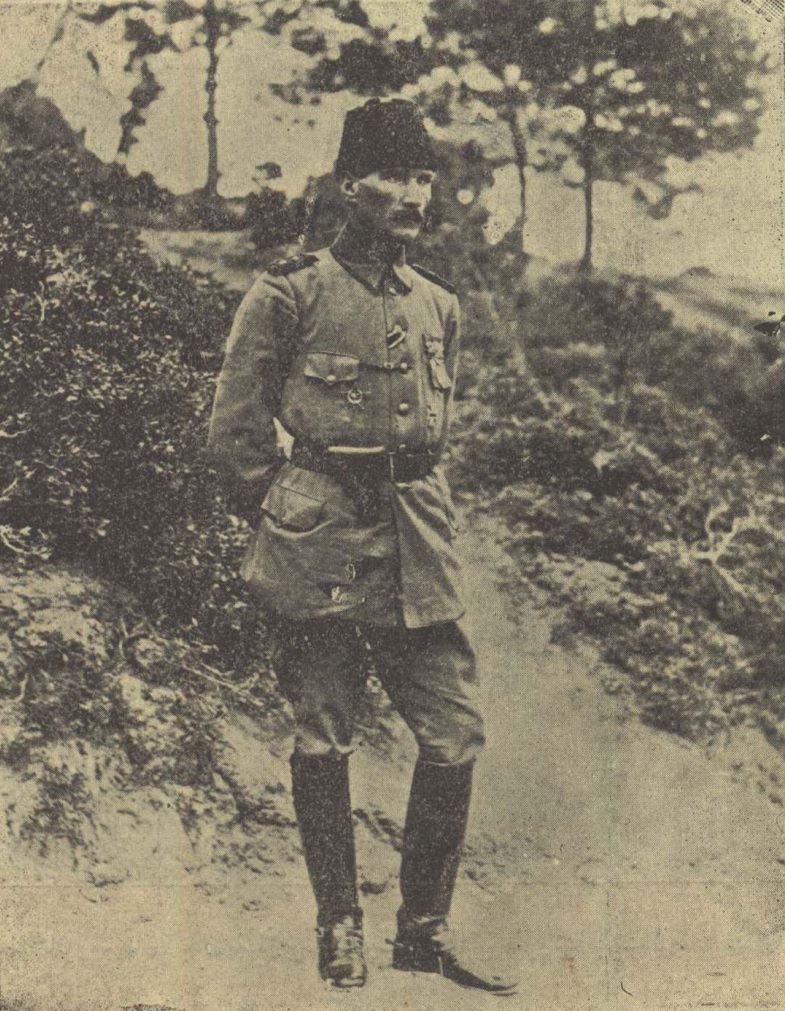
61km
Length of the strait from the Aegean to the Sea of Marmara.
Cipher telegram · Çanakkale Fortified Area · 5 Mart 1331 (Rumi)
000 / 100
How would you like to enter the story?
Legend has it that the crescent and star on the Turkish flag were born from the reflection of the moon and a star in a pool of martyrs’ blood.
Gallipoli Peninsula40°09′N · 26°24′E19 February 1915 – 9 January 1916
The world’s mightiest navy set out to force a strait just 1,200 metres wide at its narrowest point. It failed. Then the armies landed, and the war raged for months on every ridge of the peninsula.
Scroll into the straitPrologue · Autumn 1914
Europe was on fire. The shortest sea route for supplying Russia was closed. The Allies decided to force a single gate: the Dardanelles. If the strait fell, Istanbul would fall, the Ottoman Empire would leave the war and its course would change.
61km
Length of the strait from the Aegean to the Sea of Marmara.
1,200m
Its narrowest point, between Çanakkale and Kilitbahir, where the forts faced each other.
3November 1914
The first shots. British and French ships bombarded the forts at Seddülbahir and Kumkale.
Defending
5th Army · Liman von Sanders Pasha
Attacking
Mediterranean Expeditionary Force · Gen. Sir Ian Hamilton
Chapter I · Night of 7–8 March 1915
Nusret, a small minelayer under Captain Tophaneli Hakkı Bey, slipped out of Çanakkale under cover of darkness. Running without lights, she crossed waters swept by enemy searchlights and glided into Erenköy Bay.
She laid her mines in a single row parallel to the shore. The Allied battleships had been turning in these waters for days and believed the bay was safe. The line went unnoticed for ten days.
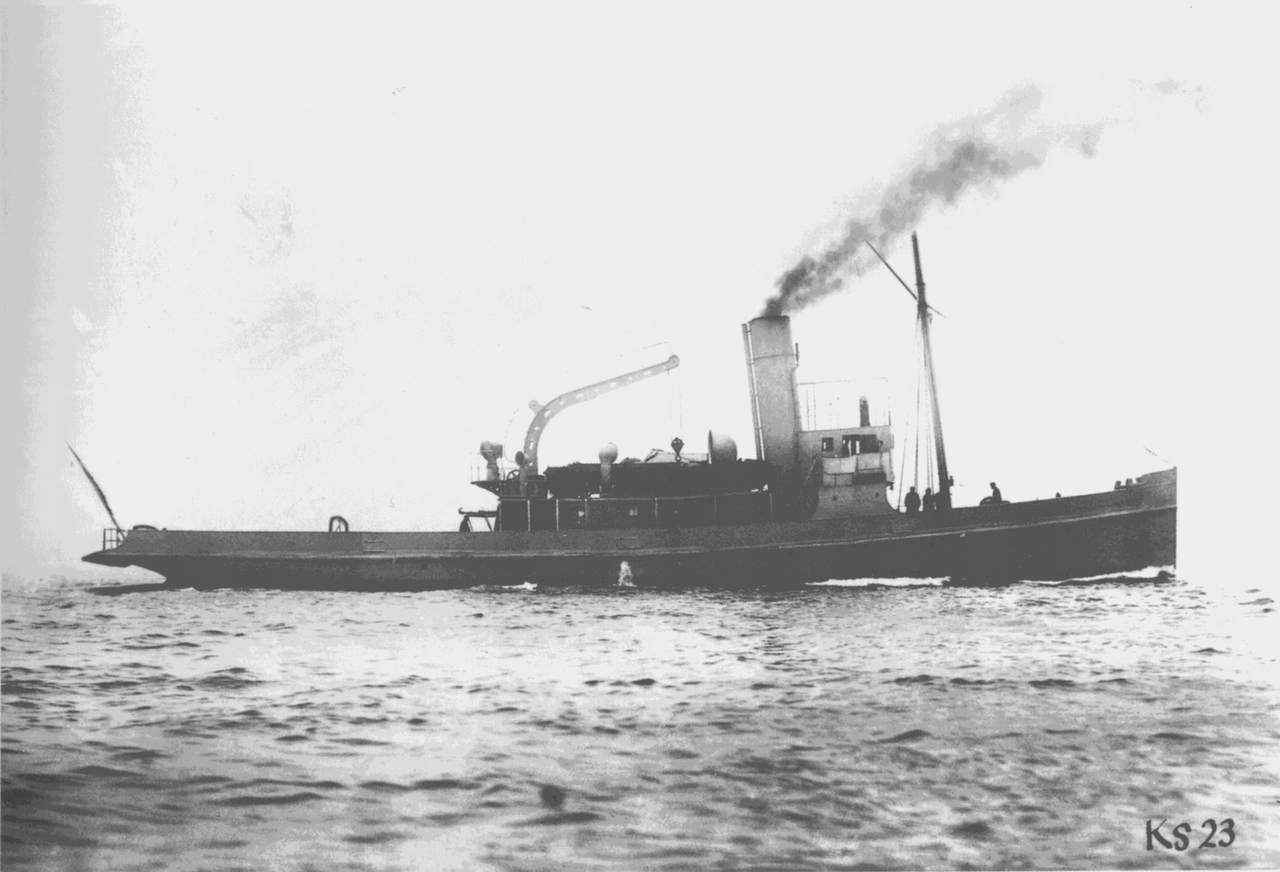 Nusret · Kiel, 1912
Schematic map, not to scale.
Chapter II · 18 March 1915 · Rumi 5 Mart 1331
In the morning a fleet of 18 battleships, 14 British and 4 French, steamed into the Straits. The aim: silence the forts and break through to the Sea of Marmara. By evening six battleships had been sunk or badly damaged.
10.30
Backed by cruisers and destroyers, the battleships enter the Straits. Leading the way is the line of Queen Elizabeth, Agamemnon, Lord Nelson and Inflexible.
11.30
The first line pounds the forts of Çanakkale and Kilitbahir from long range. Turkish artillery answers from the forts, from field howitzers and from batteries that keep changing position.
12.15
Admiral Guépratte’s battleships Suffren, Bouvet, Gaulois and Charlemagne close in on the forts. Gaulois and Suffren take heavy hits.
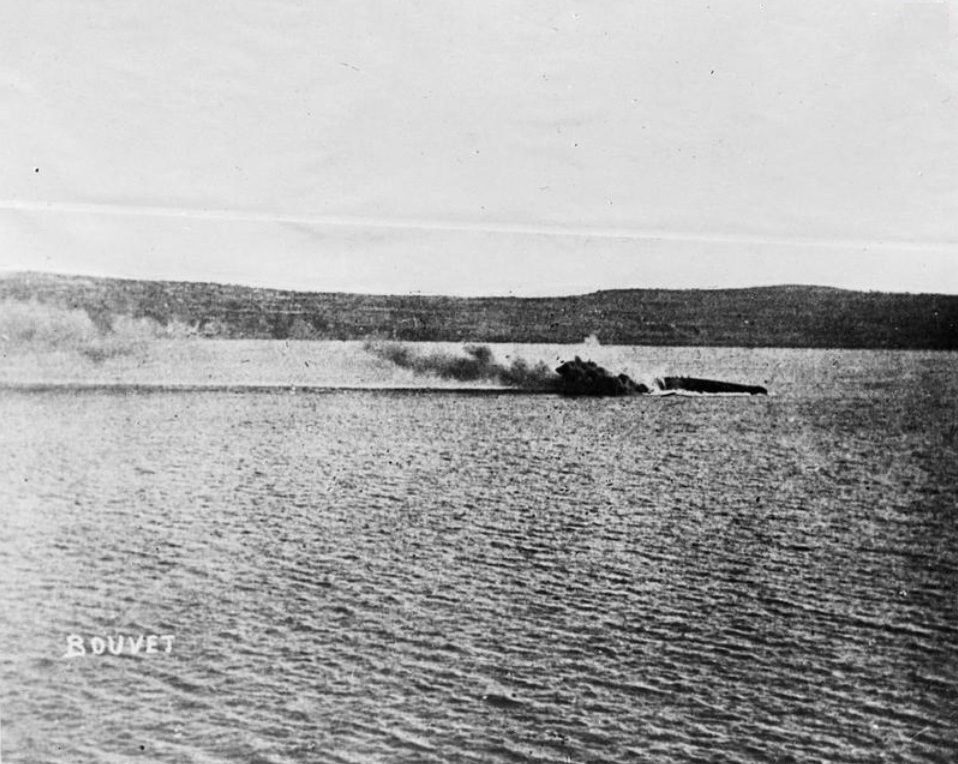
13.58
While withdrawing, she struck one of Nusret’s mines in Erenköy Bay. She capsized and sank within two minutes, taking more than 600 sailors with her.
14.30
Ocean, Irresistible, Vengeance, Swiftsure, Majestic and Albion are sent forward. The forts keep firing; the minesweepers turn back under heavy fire.
16.11
The battlecruiser Inflexible struck a mine. Badly damaged, she limped away to Bozcaada (Tenedos).
16.15
Irresistible also struck a mine in the same line and drifted helplessly with the current. Her crew was taken off; the ship sank that evening.
18.05
Ocean, sent to rescue Irresistible, struck a mine. She too sank in the darkness of the night.
Evening
Admiral de Robeck pulled the fleet back. The navy never tried to force the Straits again. Çanakkale could not be passed by sea.
In Turkey, 18 March is commemorated today as Çanakkale Victory and Martyrs’ Remembrance Day.
Interlude · Rumeli Mecidiye Fort
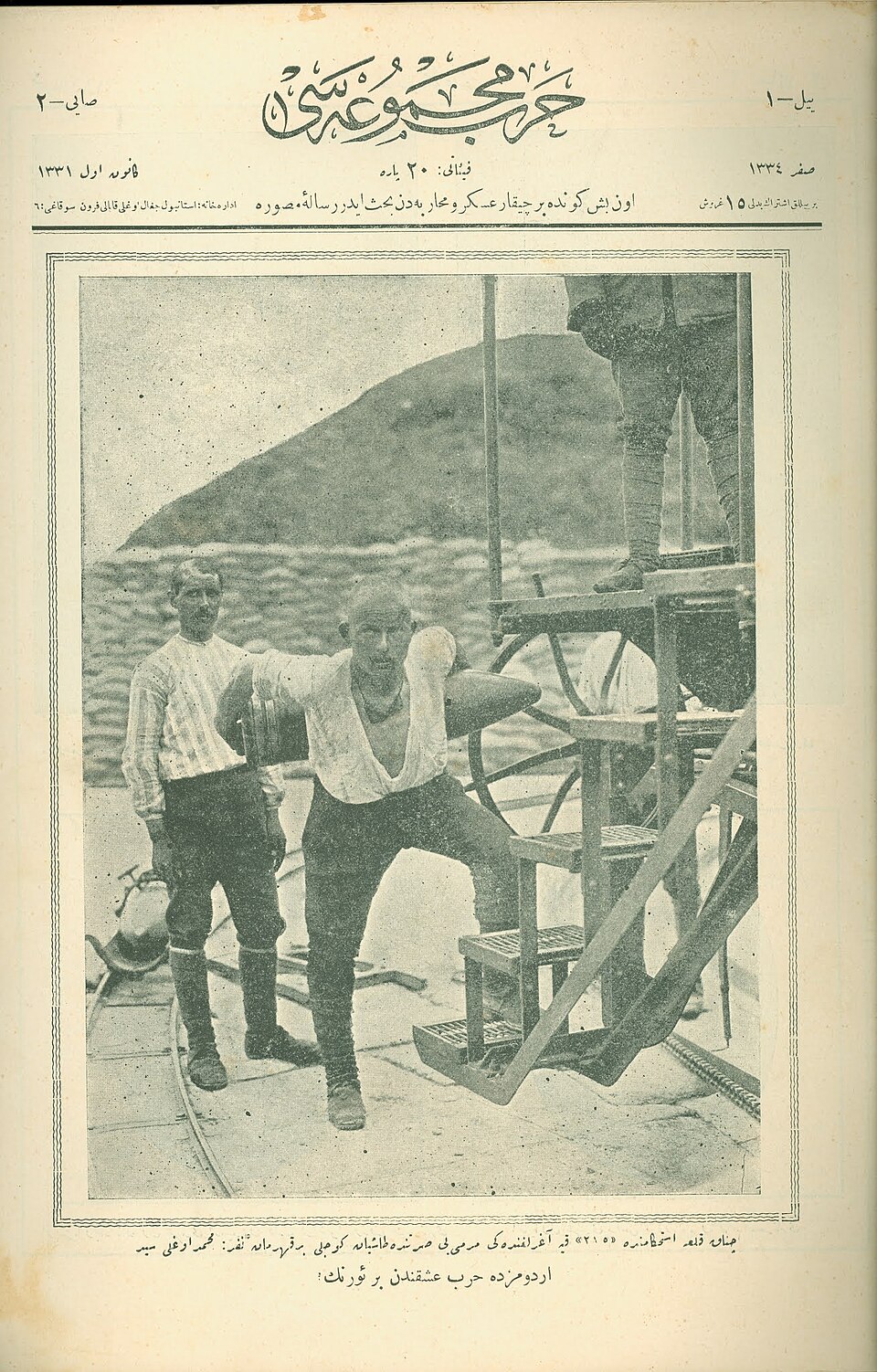
During the bombardment the shell hoist of the fort’s gun broke. Corporal Seyit Ali from Havran hoisted the shells onto his back and carried them to the gun himself. One of these shells, weighing about 215 kilos, is said to have hit a British battleship.
After the war, when he was photographed, he was asked to lift the same shell again. He could not. He is said to have replied: “If there is war again, I will lift it again.”
The shell’s weight (276 kg in some sources), the ship it hit and his exact words differ between sources.
Shell loaded.
Chapter III · 25 April 1915, dawn
Having failed by sea, they tried by land. On the morning of 25 April, before sunrise, tens of thousands of soldiers began landing on the shores of the peninsula.
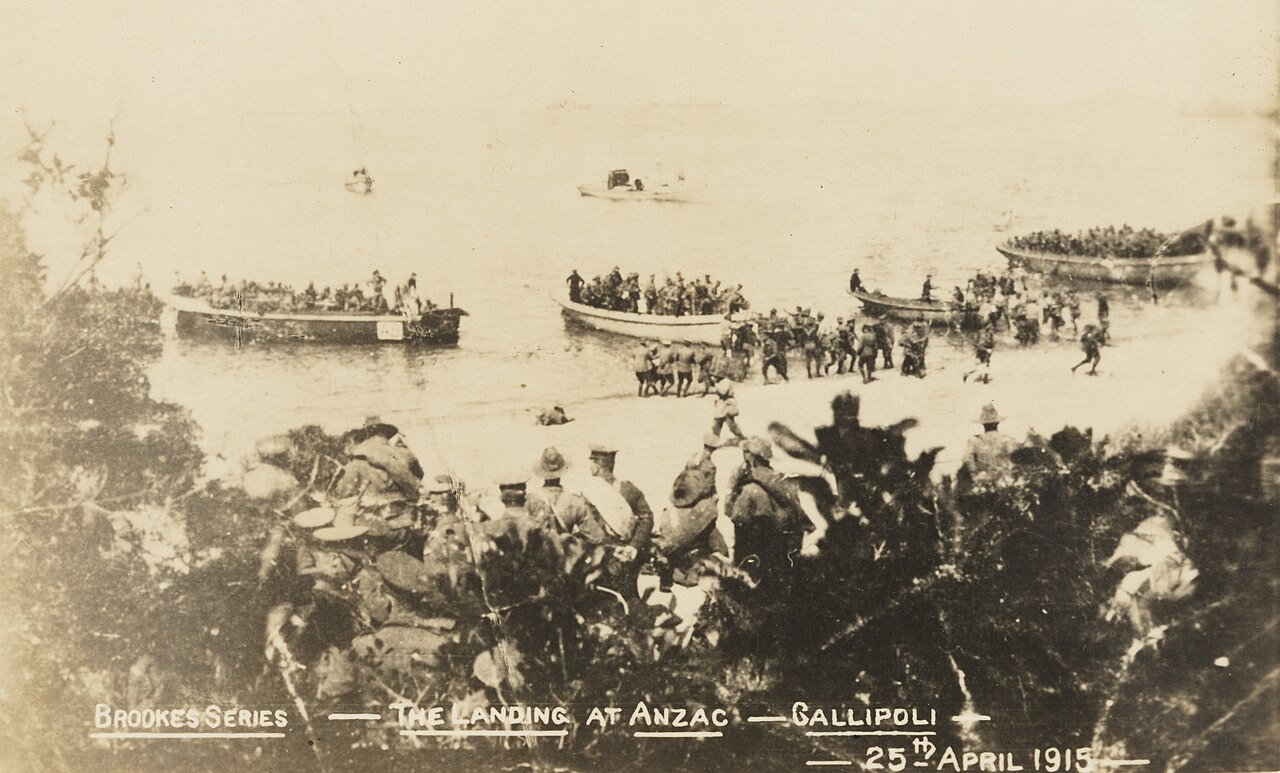
04.30
Australian and New Zealand Army Corps
In the dark the boats were carried off by the current and landed about 1.5 km north of the planned site, at the foot of steep cliffs. Only a few Turkish detachments faced them. They held the ridges until Mustafa Kemal’s 57th Regiment arrived.
Conkbayırı (Chunuk Bair) · 25 April 1915, towards noon
Mustafa KemalWhy are you running away?
SoldiersSir, the enemy!
Mustafa KemalOne does not run from the enemy!
SoldiersWe have no ammunition left!
Mustafa KemalIf you have no ammunition, you have your bayonets!
I am not ordering you to attack,
I am ordering you to die.
In the time it takes us to die, other troops and commanders can come and take our places.
Climbing Conkbayırı, Mustafa Kemal met a group of soldiers falling back with no ammunition left. He had them fix bayonets and lie down. The advancing enemy lay down too. Those few minutes were enough for the 57th Regiment to arrive.
The regiment was almost entirely wiped out that day and in the days that followed. Its commander, Lt. Col. Hüseyin Avni Bey, fell on the same ridges in August.
Chapter IV · May – November 1915
At Quinn’s Post (Bomba Sırtı) the Turkish and ANZAC trenches came as close as eight metres in places. A grenade’s throw. Close enough to hear a whisper.
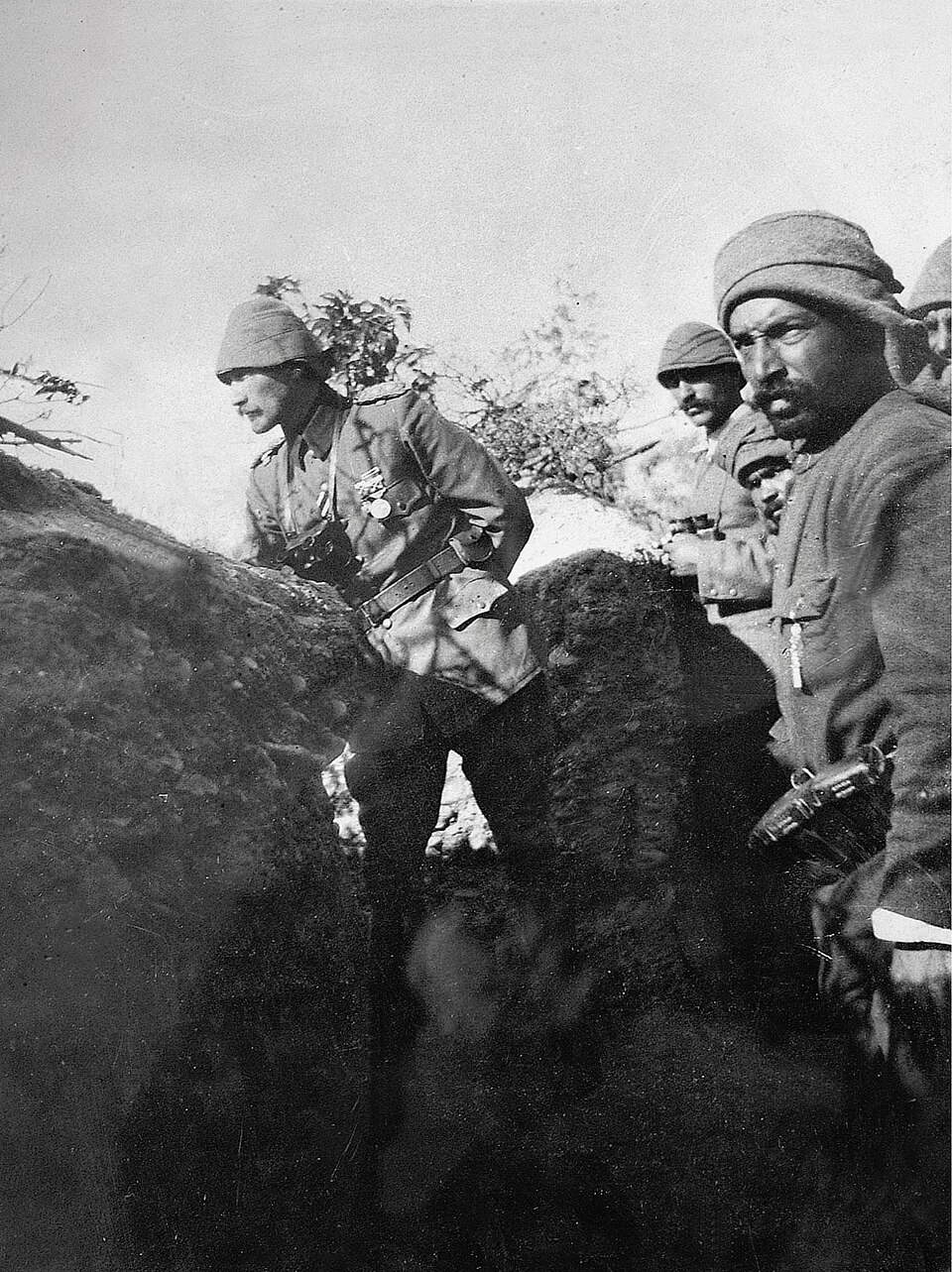
In Çanakkale stands a mirrored bazaar,Mother, I am off to face the enemy.Oh, my youth, alas.
Chapter V · 6–10 August 1915
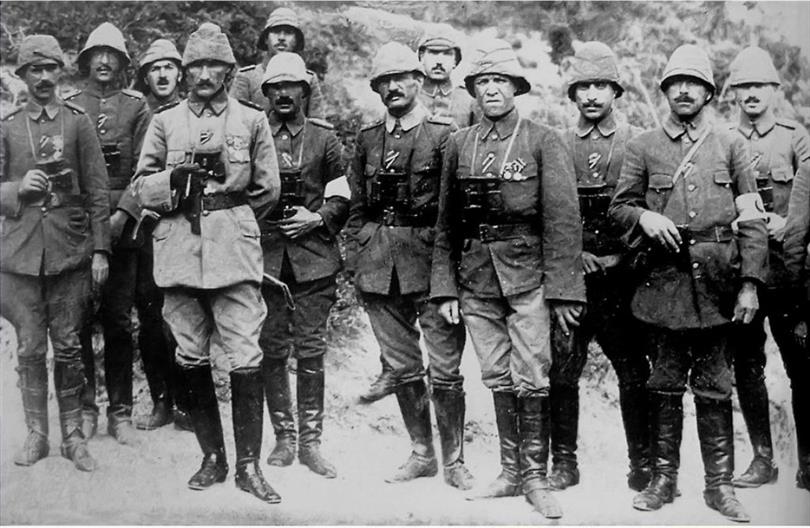
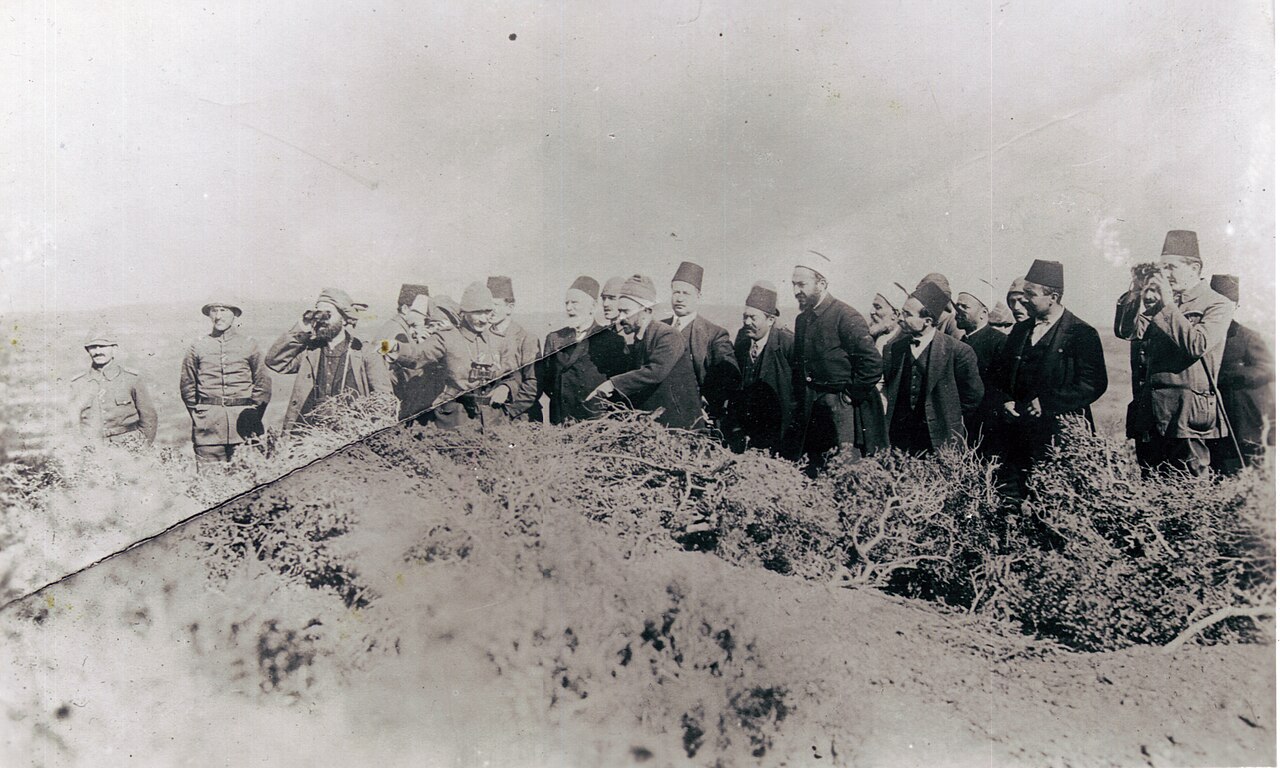
The Allies made their last great push to cut the peninsula in two: a diversion at Lone Pine (Kanlısırt), a night march on Chunuk Bair (Conkbayırı) and a new landing at Suvla.
Pocket watch · 10 August 1915
During the charge a piece of shrapnel struck the watch in his breast pocket. The watch was shattered; Mustafa Kemal escaped with a light wound. He later gave the watch to Liman von Sanders as a keepsake.
Illustration
“Soldiers! There is no doubt that we will defeat the enemy before us. But do not rush; let me go forward first. When you see me give the signal with my whip, all of you charge together.”
Chapter VI · December 1915 – January 1916
Winter set in and hope ran out. London decided to evacuate the peninsula.
Arıburnu and Anafarta were evacuated on the night of 19–20 December, Seddülbahir (Cape Helles) on the night of 8–9 January. More than a hundred thousand soldiers were embarked in silence, night after night.
To make the trenches look occupied, they used the “drip rifle” invented by the Australian soldier William Scurry. Water dripped from an upper tin into a lower one; once it was heavy enough, it pulled the trigger. The rifles kept firing for a while after the men had gone.
By the morning of 9 January 1916 not a single Allied soldier remained on the peninsula. Çanakkale had not been passed.
The toll
The peninsula was small; the price was enormous. Figures vary by source; here we show the most widely accepted ranges.
1 dot = 1,000 peopleRange up to the upper estimate in the sourcesCasualties: killed, wounded, sick and captured
| Side | All casualties | Deaths |
|---|---|---|
| Ottomans | ≈ 251,000 | ≈ 57,000 – 87,000 |
| Allies | ≈ 250,000 – 300,000 | ≈ 56,700 |
Names
Some of their names are in the history books; most survive only on a gravestone. Drag the cards.
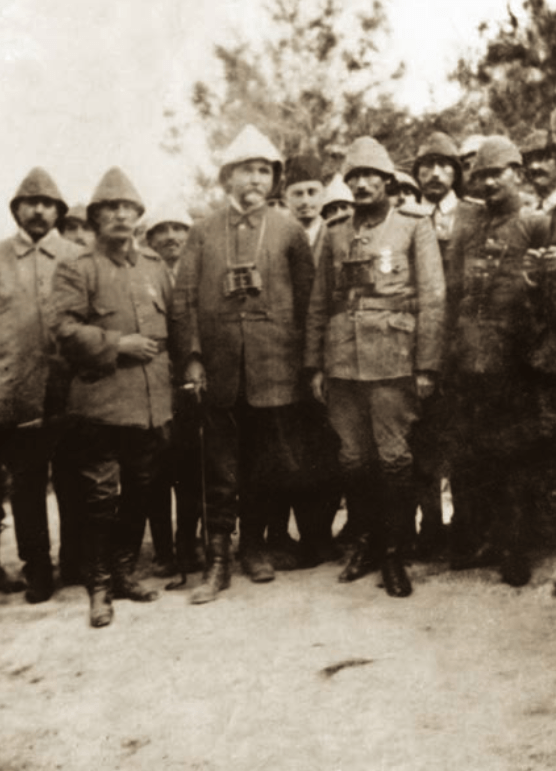
Lt. Col. · 19th Division
On 25 April he stopped the landing at Chunuk Bair; on 10 August, leading the Anafarta Group, he retook the hill. Eight years later he would found the Republic of Turkey.
Arıburnu · Anafarta
Corporal · Rumeli Mecidiye
A gunner from Havran. On 18 March he carried shells on his back to a gun whose hoist had broken. He died in 1939 in his hometown of Havran.
The Straits · 18 March
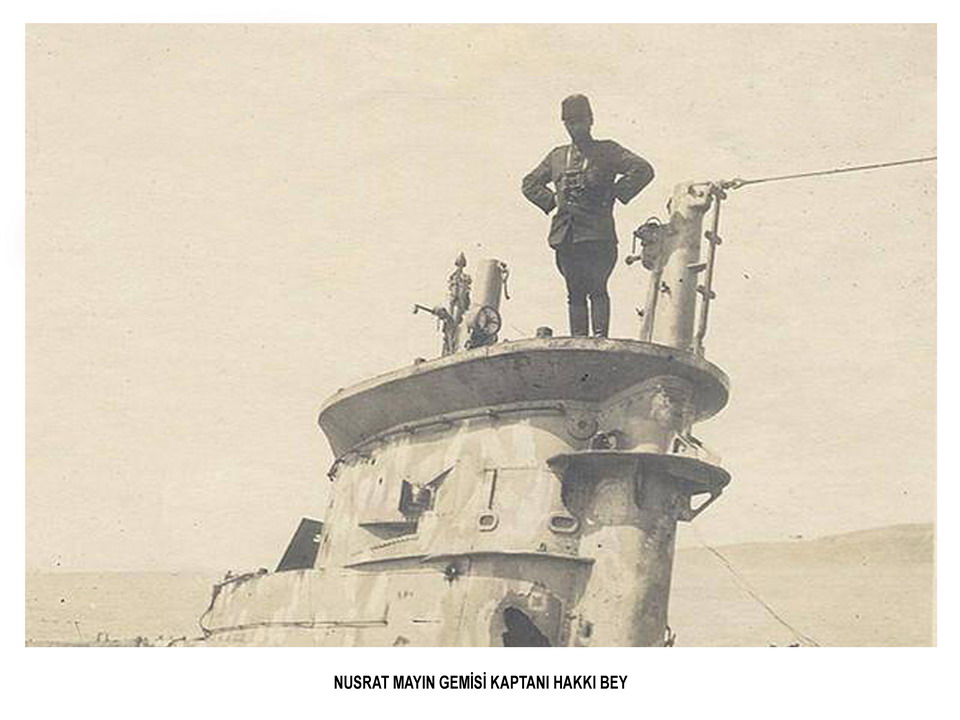
Captain · Nusret
The commander who took Nusret into Erenköy Bay in the dark and laid the line of 26 mines. One of the quiet architects of 18 March.
Erenköy Bay · 8 March
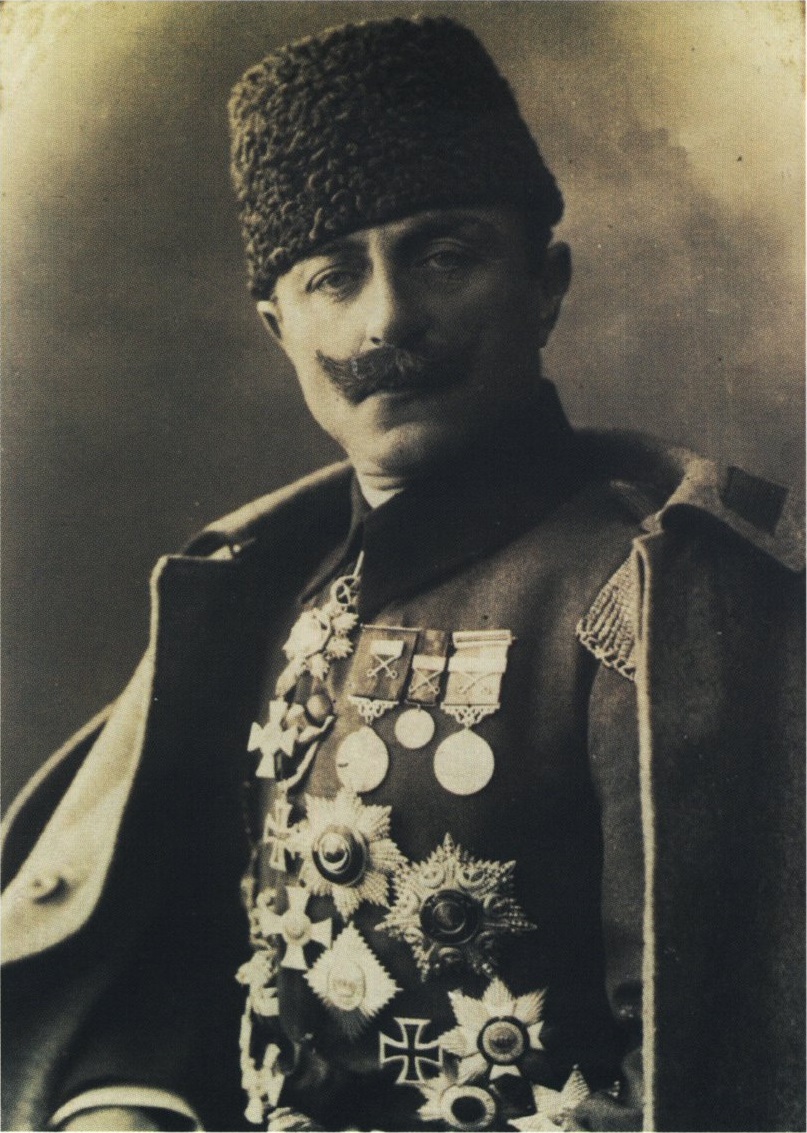
Commander · Fortified Area
Commander of the forts and batteries that defended the Straits on 18 March. The naval victory was directed from his headquarters.
Çanakkale · 18 March
Major · 3rd Battalion, 26th Regiment
On 25 April he held the shores of Seddülbahir with a small force until evening. His memoirs are among the most important testimonies of that day.
Seddülbahir · 25 April
Sergeant · 26th Regiment
At Seddülbahir, with a handful of men, he pinned the landing troops to the beach for hours before he fell. His name lives on in a martyrs’ cemetery there today.
Seddülbahir · 25 April
Lt. Col. · 57th Regiment
On 25 April he rushed his regiment to Chunuk Bair. He fell on the same ridges in August 1915.
Chunuk Bair · 25 April
Private · the nameless tens of thousands
Tens of thousands of soldiers from every corner of Anatolia and the empire. For most of them, not even the grave is known.
On every ridge · every day
Mehmet Âkif Ersoy · To the Martyrs of Çanakkale · translation
What is this battle of the Straits? Has the world ever seen its like?
Four, five of the mightiest armies bear down,
Seeking a path across the heights to reach the Marmara,
Upon a tiny strip of land, ringed by how many fleets.
O soldier, fallen to the earth for this land!
Your forefathers might well descend from heaven to kiss that pure brow.
Who could dig a grave that would not be too narrow for you?
Were I to say, “Come, let us bury you in history,” you would not fit.
Epilogue · Arıburnu, 1934
Heroes who shed your blood on the soil of this country! Here you lie in the soil of a friendly land. Rest in peace and tranquillity. You lie side by side, in each other’s arms, with the Mehmetçiks.
Mothers who sent your sons to war from faraway lands! Wipe away your tears. Your sons lie in our bosom. They are at peace and will rest in peace. Having given their lives on this land, they have become our sons as well.
Text attributed to Mustafa Kemal Atatürk, 1934 · Today it is inscribed on the memorial at Anzac Cove.
The page dims, the sound fades and 60 seconds are counted.
60
In memory of everyone who lost their life at Çanakkale.